BF2.3

BF2.5
BF8-9.9
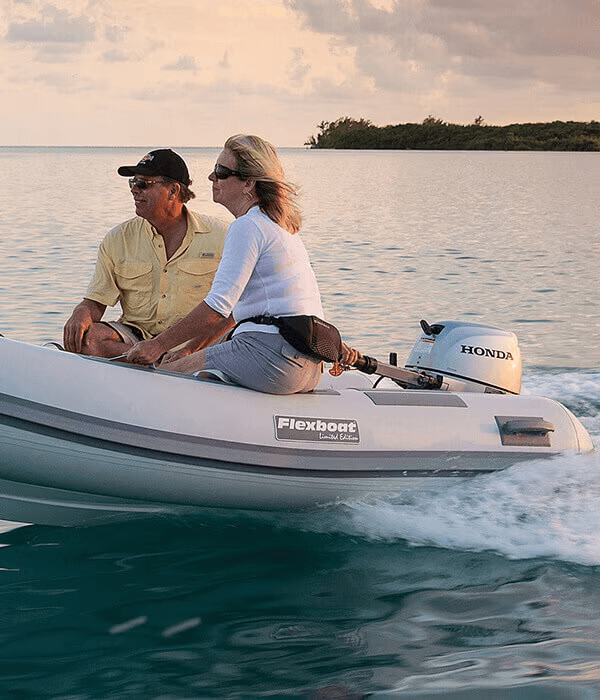


When one steps onto a boat, perhaps for a day of fishing or a scenic cruise, rarely do they consider the subtle design aspects that make the journey smooth and enjoyable. One such critical element is the boat’s deadrise. The deadrise of a boat is the angle between the hull bottom and a horizontal plane, which plays a crucial role in both performance and comfort.
A flat-bottomed boat with zero degrees deadrise might be perfect for calmer waters or an afternoon at the lake. However, a vessel with a steep deadrise angle, approaching 25 degrees, cuts through choppy seas more efficiently, offering a smoother ride. This understanding helps boat enthusiasts choose the best design for their maritime adventures.
The curiosity about what makes boats perform differently under various conditions often leads to exploring concepts like deadrise. It’s not just a technical detail; it’s a gateway to selecting the right craft and enhancing the overall boating experience. Understanding these subtle engineering nuances can transform a novice’s perception, making every outing not only more comfortable but also more exhilarating.
Deadrise simplifies the understanding of a boat’s performance and comfort level. Essentially, it is the angle between the bottom of the hull and a horizontal plane. Flat-bottom boats have a deadrise of zero degrees, while deep-V hulls can have angles up to 25 degrees.

Notably, the angle affects the ride and layout choices. A deep-V hull may mean a sacrifice in lateral stability, as seen in some deck boats, emphasizing the need for balance in design priorities, especially in performance and comfort.
Different boats use varying deadrise angles based on their intended use. Fishing boats might prioritize stability with moderate deadrise, while speedboats opt for higher angles for better handling in rough water.
Each deadrise design comes with its own merits and trade-offs, making it a crucial consideration in boat design. This element plays a significant role in meeting the diverse needs of boating enthusiasts.
The deadrise angle of a boat significantly influences its performance across various water conditions. A boat with a higher deadrise provides a smoother ride on rough waters. This is because the V-shaped hull can cut through waves more effectively, reducing the impact felt by passengers.

Conversely, a flat-bottomed boat excels in calm waters, offering more stability. It can also achieve higher speeds due to less water resistance. Boats with different deadrise angles are better suited to specific conditions, highlighting the importance of choosing the right design based on intended use.
Many performance-oriented boats have a deadrise ranging from 20 to 24 degrees. This design helps enhance their offshore capabilities. For instance, high-performance models like the Tiara or Sea Ray often feature a deadrise within this range, offering improved comfort and efficiency on the open sea.
Choosing a boat with the appropriate deadrise is essential for optimal fuel efficiency and stability. A deeper V-hull, while more comfortable in rough waters, may consume more fuel due to increased water resistance. Thus, understanding how deadrise affects a boat’s handling and efficiency is vital for both casual and serious boaters.
For more detail on deadrise and its significance in boating performance, consider exploring valuable resources or discussing options with experts in boat design.
The deadrise angle of a boat significantly impacts its performance, handling, and stability. Variations in the angle can range from shallow to steep, each offering distinct characteristics that cater to different boating needs and conditions. Understanding these variations helps in choosing the right hull design for specific maritime activities.

Shallow deadrise angles are typically found in boats used for calm waters, such as lakes or rivers. These angles generally range from 0° to 10°, often resulting in a flatter hull. This design enhances stability, allowing the boat to sit flatter on the water surface, which is beneficial for fishing or leisure boating.
A flat hull with a shallow deadrise angle minimizes the amount of drag, making it efficient at low speeds. It also facilitates easier planing, allowing the boat to move swiftly in tranquil conditions. However, the trade-off is reduced comfort in choppy waters, as the boat tends to pound or slam against waves, creating a rougher ride compared to boats with steeper deadrise angles.
Steep deadrise angles are usually greater than 20° and are common in boats designed for open or rough waters, where conditions can be more challenging. This design allows the hull to cut through waves more effectively, providing a smoother ride in choppy seas. It enhances the boat’s ability to handle adverse conditions by reducing wave impact.
While boats with steep deadrise angles offer superior comfort in rough water, they tend to have higher drag due to the pronounced V-shape of the hull. This can lead to increased fuel consumption. Nonetheless, for offshore fishing or high-speed activities, the improved performance and comfort often outweigh the drawbacks.
Measuring the deadrise of a boat involves determining the angle of the hull’s V-shape in relation to the horizontal plane.

A common approach is to examine the deadrise at the transom.
To calculate, take the angle of the V at the transom and apply the formula:
180 – (angle of the V), divided by two.
For instance, if the angle is 135 degrees, the deadrise would be 22.5 degrees (found by 180 – 135 = 45, divided by 2).
The use of protractors or digital angle finders can help ensure accuracy in these measurements.
Creating a simple list of steps can further aid in the process:
Flat-bottom boats have a deadrise of zero degrees, meaning no V is present. This information contrasts with a deep-V hull, where the deadrise can be as high as 25 degrees.
It’s essential for boat owners and enthusiasts to understand how deadrise impacts performance and comfort. The right measurements can assist in choosing a boat that meets specific needs, whether for stability or speed.
The deadrise angle plays a significant role in determining a boat’s performance, particularly in handling and comfort. A steeper angle typically enhances the vessel’s ability to slice through waves smoothly, offering a softer ride. This results in less jarring and more comfort for passengers when navigating rough waters.

A comparison of how deadrise affects boat performance:
| Deadrise Angle | Impact on Handling | Impact on Comfort |
|---|---|---|
| Steeper | Cuts through waves with ease | Softer ride |
| Shallower | Better stability in calm conditions | May lead to a bumpier experience in waves |
Handling Differences: Boats with steeper deadrise angles are often more agile and capable of climbing over waves sharply. This feature is beneficial for navigating high seas or rough conditions. Conversely, vessels with shallower angles have increased stability, especially at lower speeds.
When considering deadrise for boat stability, it’s pivotal to align the angle with the intended use. Boats used primarily for leisurely lake cruising might prioritize stability over sharp wave-cutting capabilities. On the other hand, those used in oceanic environments may need the added wave-cutting power a steeper angle provides.
Additionally, comfort often depends on speed as well. A higher deadrise allows for faster speeds due to reduced resistance, generally leading to a smoother ride. Those looking for speed and smooth navigation would benefit from considering a greater angle. Conversely, for activities that require steadiness at slow speeds, a lesser angle is preferable.